A dead battery always seems to happen at the worst possible time. With older cars, many people would just grab any jumper cables, clip them on, and hope for the best. Modern vehicles are more sensitive, with computers, sensors, and delicate electronics that do not appreciate voltage spikes or loose connections.
Jump-starting is still possible and safe, but it has to be done the right way so you do not turn a simple no-start into a bigger repair.
Why Modern Vehicles Need Extra Care When Jump-Starting
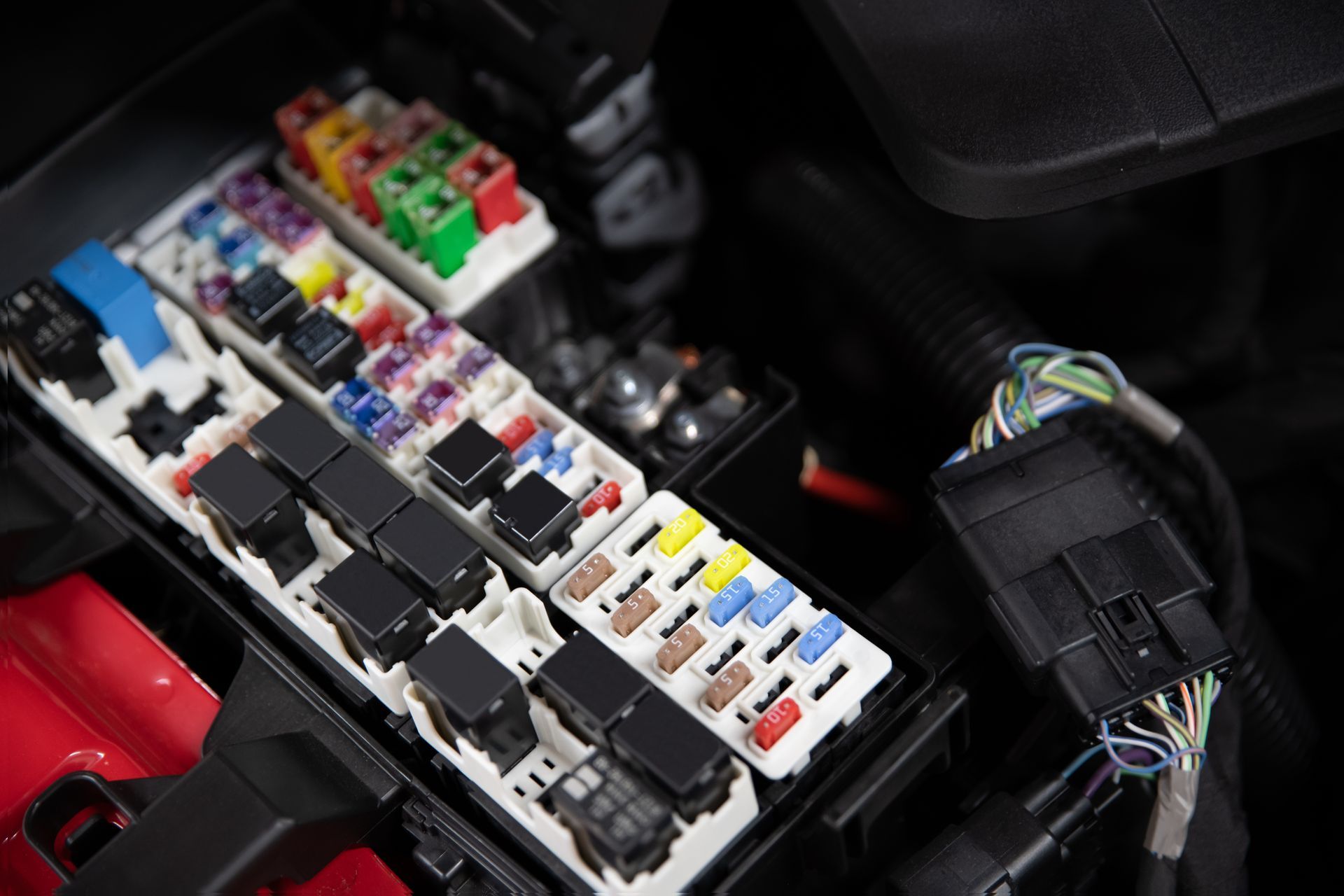
Today’s cars have multiple control modules, smart alternators, and complex wiring networks. A single voltage surge from a sloppy jump-start can stress those components, trigger warning lights, or even damage control units. That is why correct cable order and solid connections matter so much more than they used to.
Many newer charging systems also monitor battery condition and adjust output. If a weak battery is suddenly hit with an aggressive boost, the alternator can be forced to work very hard right away. We see quite a few alternator failures that started with a long period of driving immediately after a jump on a badly worn battery.
What You Should Check Before Reaching for Jumper Cables
Before you connect anything, it helps to slow down and look the situation over. A quick checklist can keep you from boosting a car that has a different problem entirely:
- Confirm the shifter is in Park (or Neutral for manual) and the parking brake is set
- Make sure both vehicles are similar voltage systems, typically 12-volt for passenger cars
- Look for obvious damage, leaks, or burning smells around the batteries and cables
- Check that the donor vehicle’s battery is healthy and not weak itself
- Turn off lights, HVAC, and accessories in both vehicles to reduce electrical load
If you see a swollen battery case, cracked terminals, or heavy corrosion that looks wet or crusty, it is safer to have the battery inspected instead of forcing a boost.
Step-by-Step: The Right Way to Connect Jumper Cables
Once you are sure it is safe to proceed, use a clear, repeatable order every time. That order reduces the chance of sparks right at the battery and keeps polarity correct. A good sequence looks like this:
Turn both ignitions off and set parking brakes.
- Connect the red (positive) clamp to the positive terminal on the dead battery.
- Connect the other red clamp to the positive terminal on the donor battery.
- Connect the black (negative) clamp to the negative terminal on the donor battery.
- Connect the final black clamp to a clean, solid metal part of the engine block or chassis on the dead vehicle, away from the battery.
Start the donor vehicle and let it run a couple of minutes, then try starting the dead vehicle. Once it is running, remove the cables in the reverse order without letting the clamps touch each other.
Safer Alternatives: Using a Jump Pack Correctly
Portable jump packs are very handy, and we use them in the shop often, but they still need to be treated with respect. To get the most from one:
- Make sure the jump pack is fully charged before you rely on it
- Match the clamps to the correct positive and negative points, just like with cables
- Use the dedicated jump posts if your vehicle has them under the hood
- Keep the pack flat and stable so it does not fall into moving engine parts
- Disconnect it as soon as the engine starts and is idling smoothly
A good jump pack avoids putting another vehicle at risk and usually provides a more controlled boost than a set of tired jumper cables that live in the trunk.
Common Jump-Starting Mistakes to Avoid
Most of the damage we see from bad jump-starts comes from the same mistakes repeated over and over. Some habits to avoid are:
- Accidentally reversing polarity on the clamps, even for a moment
- Letting clamps touch each other or metal parts while connected to a live battery
- Revving the donor engine very high while everything is still hooked up
- Trying to jump a frozen, cracked, or obviously leaking battery
- Using frayed, undersized cables that get hot or spark under load
If something does not look or feel right, it is better to stop and have the car checked than to keep forcing the jump and risk the electrical system.
When You Should Stop Trying and Call for Help
If the engine clicks but never cranks, even with a good boost, there may be a starter, cable, or
internal battery problem rather than just a low charge. Repeated attempts that barely turn the engine over can overheat cables and strain the donor vehicle. The same goes for a situation where the car starts, runs rough, and dies again as soon as you remove the cables.
We usually suggest calling for help or scheduling a tow when jump-starting has been tried correctly, and the vehicle still will not stay running. At that point, proper testing of the battery, alternator, and connections is the safest way forward rather than guessing in a parking lot.
Get Jump-Start Help in Charlotte, NC with Woodie's Auto Service & Repair Centers
We can test your battery, charging system, and cables to find out why your vehicle needed a jump in the first place and whether anything was damaged in the process. We will explain whether a simple battery replacement will solve the problem or if there is a deeper issue that needs attention.
Call
Woodie's Auto Service & Repair Centers in Charlotte, NC to schedule electrical diagnostics so your car is ready to start even on the most inconvenient mornings.
No matter where you are in the Carolinas, expert auto care is always close by. With convenient locations in North Carolina and South Carolina, our team is ready to keep your vehicle in top shape. Visit the location nearest you today and experience professional service you can trust.
North Carolina (NC)
- Charlotte, NC
- Davidson, NC
- Huntersville, NC
- Mint Hill, NC
- Matthews, NC
South Carolina (SC)
- Indian Land, SC
- Fort Mill, SC
- Summerville, SC
- Charleston, SC
- Rock Hill, SC
- Mount Pleasant, SC